
What Another Season of Neglect Actually Costs You
Skip garage door prep this fall and the bill doesn't show up as a line item — it shows up as a blown-in door during a nor'easter, a soaked garage floor from failed weatherstripping, or a torn-off panel that takes your opener and track with it. Once wind gets inside a garage through a failed door, it pushes upward on the roof structure from the inside, which is how a garage door failure turns into a roof problem. A door that limps along all winter on worn rollers and a tired spring is also a door that's far more likely to seize up or come off track on the one night you actually need it to open or close.
Why the Garage Door Is the Weakest Wall in the House
Every other wall in your home is a continuous, braced structure. The garage door is a large moving panel — often 16 to 18 feet wide for a double door — held in place by tracks, rollers, hinges, and a spring system, not by framing. That's a lot of surface area for wind to grab, and it's the single largest opening most homes have. When sustained wind or a sudden gust load hits a door that isn't properly reinforced, the panels can bow, the track can bend, or the whole assembly can separate from the opening. None of that requires a direct hit from debris — straight-line wind pressure during a strong nor'easter is enough on its own.
Why This Matters More With Older Housing Stock
A lot of homes in this part of Middlesex County still have their original garage doors — sometimes original hardware, too. Older doors were frequently built without wind-rated bracing, use thinner panel material than current doors, and have decades of wear on hinges, rollers, and track bolts that were never top-tier to begin with. Add the area's freeze-thaw cycles and road salt tracked in on car tires all winter, and you get accelerated rust on tracks, springs, and hinge pins — exactly the hardware you're relying on to keep the door stable in wind.
A Pre-Storm Checklist That Actually Matters
Most of this takes an afternoon and doesn't require special tools. The goal is to catch the failure points before wind finds them for you.
- Inspect panels for dents, rust-through, or delamination. A panel that's already compromised is the one that will crack or buckle under wind load. Wood doors especially should be checked for warping or soft spots where moisture has gotten in.
- Check track alignment. Stand back and sight down each track — it should run perfectly straight and parallel to its opposite side. Bent or misaligned track is a common cause of doors jumping off their rollers, and wind load makes an already-marginal alignment worse.
- Tighten hardware. Hinges, roller brackets, and track bolts loosen with years of vibration from daily opening and closing. A socket wrench and twenty minutes will tighten most of what's accessible.
- Replace worn weatherstripping. The rubber seal along the bottom and sides does double duty — it keeps wind-driven rain out and helps the door seat properly against the frame, which matters for wind resistance. Cracked, flattened, or missing weatherstripping should be replaced before winter, not after the first leak.
- Test the auto-reverse safety feature. Place a piece of wood on the ground where the door closes — it should reverse on contact. This isn't wind-specific, but a door with a failing opener is more likely to get stuck half-open during a power outage mid-storm.
- Consider wind-load reinforcement. For doors without factory-rated wind bracing, horizontal reinforcement struts (national DIY kits typically run in the $50–$150 range) stiffen the panels and reduce flex under pressure. This is worth discussing with a technician rather than guessing at placement.
- Don't touch the springs yourself. Torsion springs are under high tension and are involved in most serious garage door injuries. If a spring looks stretched, rusted, or has a visible gap in a coil, that's a job for spring replacement, not a weekend project.
- Lubricate moving parts. A silicone-based lubricant on rollers, hinges, and the track helps everything move smoothly instead of grinding or sticking when temperatures swing during a freeze-thaw cycle.
- Think about a battery backup for your opener. Nor'easters routinely knock out power for hours. A battery backup means you're not stuck trying to manually crank open a door in sideways rain and wind, or worse, leaving it closed and jammed when you need your car.
When to Call Highland Park Garage Door
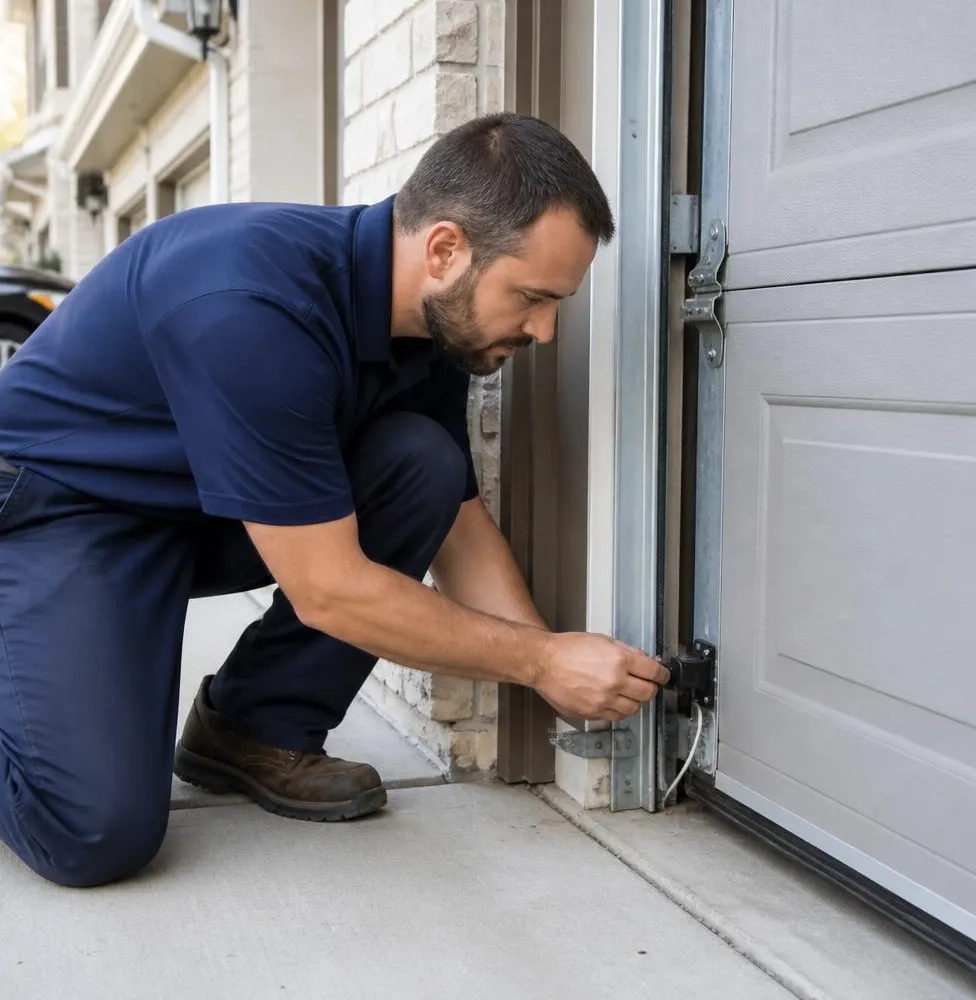
If you've gone through the checklist and found a spring that's stretched or rusted, a track that's visibly bent, or panels showing rust-through or warping, that's the point to call in a technician rather than push through it. Our garage door maintenance service covers a full inspection of tracks, rollers, hinges, weatherstripping, and hardware tension, plus adjustments before the heavy winter weather sets in. If a spring has already failed or a door has come off track overnight in a storm, our emergency garage door service is built for exactly that — we come out, assess what's safe to move, and get the door back to secure and operational.
Don't wait for the next nor'easter to find out what your garage door can't handle. Call Highland Park Garage Door today to schedule a pre-winter inspection and keep your home — and everything behind that door — protected through the season.